
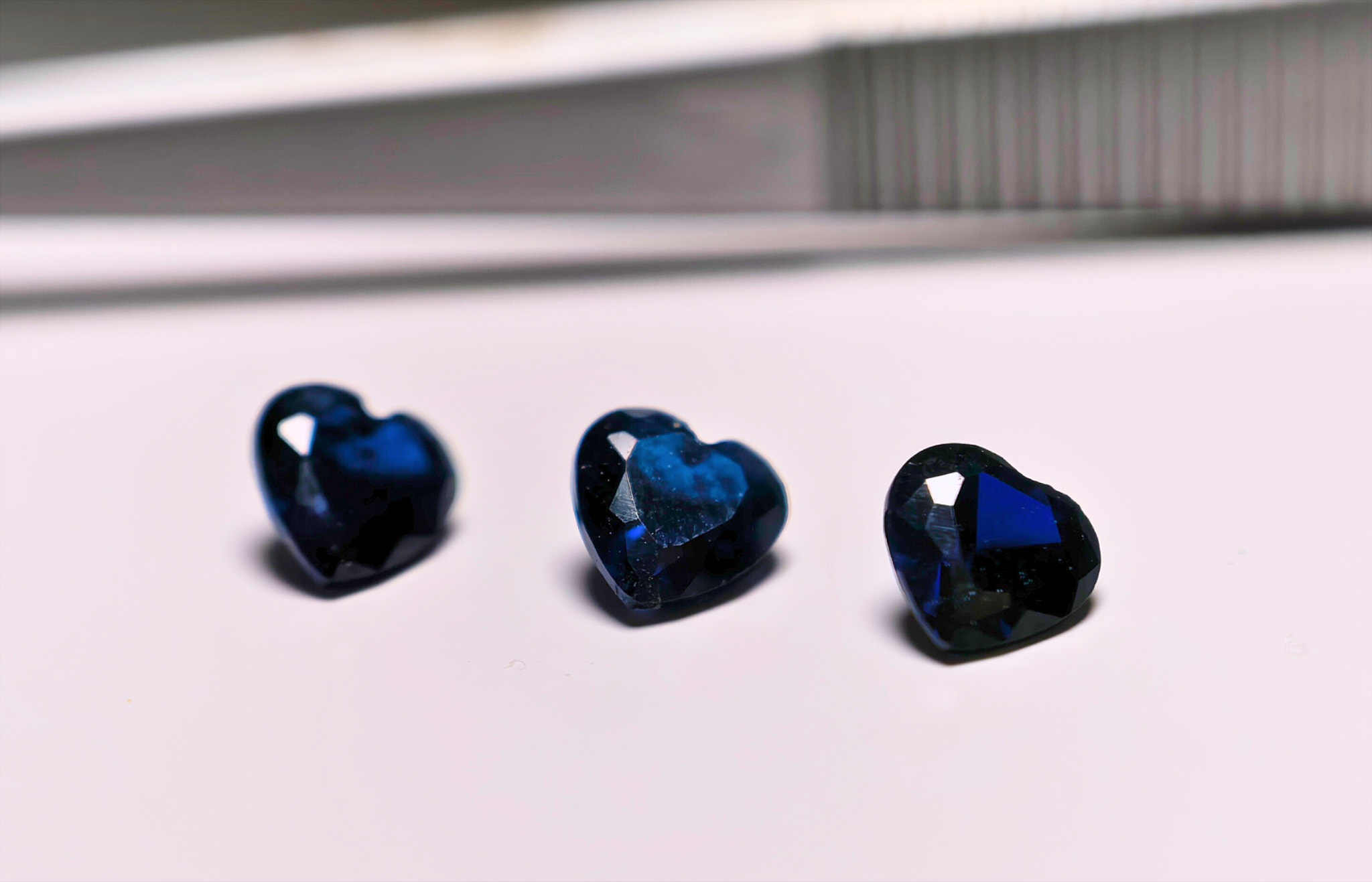
Irradiation is one of those treatments that tends to stir strong emotions, because it sounds “scientific” and for many people is automatically associated with something dangerous. In practical gemmology, however, it is primarily a method of color modification: controlled radiation changes so-called color centers in a gemstone – sites within the crystal structure that determine which wavelengths of light the stone absorbs and which it transmits. The result? The same mineral can acquire a completely different, more marketable color after treatment.
Irradiation does not have to be a form of deception. It can be an honest and legal trade practice, provided that it is disclosed and that the customer understands how such a color behaves in use and how the treatment affects the stone’s value.
This is another article in the series “Treatments and Enhancements of Gemstones,” in which we step by step discuss the most common methods used to improve the appearance of stones on the jewelry market. In previous parts, we looked at heat treatments and clarity enhancement methods; in this article, we focus on irradiation – a treatment that changes color by modifying color centers within the crystal structure. Below, we explain exactly how this process works, why it is used, and what is worth asking about before making a purchase.
What does irradiation involve?
Simply put, a gemstone is exposed to radiation (of various types, depending on the technology used), which causes the formation or modification of defects in the crystal lattice. These defects create or alter color centers, and color centers determine which wavelengths of light the stone absorbs and which it transmits – in other words, the perceived color.
To grasp this more intuitively, it helps to imagine the crystal structure as a highly ordered “grid.” In an ideal crystal, everything is perfectly in place, but in nature (and after treatments) microscopic “imperfections” appear: a missing atom here, a substituted atom there, a shift of charge elsewhere. To the human eye, it is still “the same stone,” but to light it can make an enormous difference – because such defects act like switches that control light absorption. Radiation is a tool that can create these switches or reset them.
In technological practice, various radiation sources are used (the choice depends on the material and the desired result): for example, electron beams, gamma radiation, or processes involving reactors (in an industrial, controlled setting). From the customer’s perspective, what matters most is not “exactly which radiation was used,” but the effect: color centers are created where none existed before, or existing ones are modified.
Very often, irradiation is combined with a subsequent step: annealing, that is, controlled heating. This step is crucial, because irradiation alone can produce a color that is “too raw” (for example, too dark, too gray, or too uneven), or it can create color centers that, after annealing, shift into a more stable and attractive configuration. In other words, irradiation creates the “color potential,” and annealing helps fine-tune it. Depending on the material and process parameters, annealing can:
- lighten the shade,
- shift the hue (for example, toward a purer, more desirable tone),
- even out the color appearance,
- improve the stability of the visual effect.
A key difference compared to coating: the color produced by irradiation is not “on the surface.” It is not a layer that can be rubbed or scraped off. This does not mean, however, that it is completely “indestructible” – some color centers can react to high temperatures, which is why the issue of jewelry servicing is so important in this context.

Source: https://www.gia.edu/
Why is it done? The most common goals
Irradiation is used primarily to:
- obtain a color that is rare or difficult to achieve naturally in large-scale supply,
- enhance saturation (the stone “gains color” or appears more intense),
- correct the hue (for example, shift it toward a more desirable tone),
- increase the commercial acceptability of material that, without treatment, would be much harder to sell.
The last point is particularly important in the trade: a large portion of mined rough is not “bad” – it simply does not meet market expectations in terms of color. Irradiation allows visually average material to become jewelry-attractive material. This gives customers a choice: they can purchase a stone with an excellent appearance at a more accessible price, but treated – or they can search for a rare, naturally “ideal” specimen and pay significantly more.
The best-known market example is blue topaz, commonly seen in jewelry at very affordable prices. It is a stone that perfectly illustrates the market mechanism: the color is highly desirable, the supply of naturally occurring stones in that appearance would be limited, and technology makes it possible to ensure stable and repeatable availability.
Irradiation can also be applied to other gemstones, and in the case of diamonds the subject can become particularly complex. First, because diamonds have multiple possible mechanisms of color change (different types of defects and trace elements). Second, because proper identification may require more advanced methods and experience in interpretation: some treated effects can resemble natural ones, and the financial stakes are often very high.w interpretacji: część efektów może wyglądać podobnie do naturalnych, a stawka cenowa bywa bardzo wysoka.
Color durability: does the color “last”?
This is one of the first questions customers ask – and rightly so. The answer is: it depends on the gemstone and the specific technology used, but in practice the greatest risk factor is usually temperature.
In everyday wear (daylight, normal household conditions), the color of irradiated stones is often stable. The risk arises in situations where the stone is exposed to higher temperatures than during normal use – and this most often happens not at home, but in the jewelry workshop.
Particular caution is needed during:
- jewelry repairs (soldering, heating the setting, any “hot work”),
- intensive servicing procedures where the stone is exposed to heat or prolonged mechanical stress,
- sometimes aggressive cleaning procedures (this depends on the stone and its treatment history, but the rule of thumb is simple: if a stone has a “special” color and you are not sure about its treatments, do not treat it as an indestructible material).
For this reason, if a gemstone is reported as irradiated (or if you suspect irradiation), it is genuinely important that the jeweler is aware of it and can decide whether the stone should be removed from the setting during repairs.
Safety: is an irradiated gemstone “radioactive”?
This question comes up regularly, especially with topaz, because a lot of myths have grown around the topic. In legal trade, irradiation is carried out under controlled conditions, and gemstones should only enter the market once they meet the required limits for residual radioactivity (if such residual activity could occur in a given process). Put simply: materials should not be “released to market” until they comply with applicable standards and safety practices.
From the customer’s perspective, the practical rule is:
- buy from a trustworthy source,
- pay attention to transparency and documentation (treatment disclosure, reports, return policy),
- if in doubt (for example, a stone of uncertain origin), a professional consultation is more sensible than speculation or internet scare stories.
It is also worth remembering that in gemmology, “irradiation” is primarily a treatment category describing the origin of a color, not a label meaning “this is dangerous.” In practice, the greatest risk for a customer is not radiological safety, but a lack of transparency: buying a treated-color stone at a price suggesting a rare natural equivalent, or not being informed about its sensitivity to heat during repairs.

Source: https://www.gia.edu/
How does irradiation affect value?
Irradiation almost always affects a gemstone’s value, because it changes what the market is actually paying for. In the jewelry segment, price is not determined solely by the fact that a stone “looks nice,” but by a combination of factors: rarity, natural origin of features, durability, and demand. Irradiation can enhance visual appeal, but at the same time it reduces the rarity of the color in a collector’s sense – because part of the effect has been achieved through technology.
In practice, it works like this:
- a stone after irradiation may look better (stronger color, more desirable hue), making it easier to sell and more “jewelry-friendly”;
- at the same time, the feature is not fully natural, so compared to a stone with an identical appearance but without treatment, it will usually be valued lower.
This is most evident when you compare two stones with a similar visual effect. If one has a natural color and the other a color produced by treatment, the market will often regard the natural one as more “premium” and price it higher – even if the average customer cannot see the difference with the naked eye. This is not a matter of “better or worse” in terms of use, but of differences in rarity and market narrative.
At the same time, irradiation can be budget-friendly for the customer: in many cases it allows the purchase of a stone with an intense color at a price that would be unrealistic for a natural equivalent. That is why it is best viewed as a choice:
- if the goal is visual effect and everyday wear, an irradiated stone can be a very good purchase;
- if the goal is rarity, collector prestige, or easier resale, disclosure of treatment will work against the valuation.
It is also worth remembering that irradiation can affect the secondary market: some dealers, auction houses, or private buyers will be more cautious (or will expect documentation), which translates into resale conditions. Transparency is therefore key: if the treatment is disclosed and the price reflects it, there is no problem. Problems arise when irradiation is not disclosed and the price suggests a rare, natural color variant.
Summary
Irradiation (often combined with annealing) is a treatment that changes a gemstone’s color by modifying color centers within its structure. It makes it possible to obtain intense, attractive colors and to increase the availability of stones in hues that are naturally rare or difficult to source in large quantities.
From the customer’s perspective, three things matter most. First: transparency – the treatment should be clearly disclosed, because it affects value. Second: servicing and temperature – some colors can react to “hot” jewelry work, so the jeweler should know about irradiation before any repair. Third: a conscious value choice – an irradiated stone can be an excellent purchase for wear (appearance versus budget), but it represents a different type of value than a rare, naturally colored stone.